

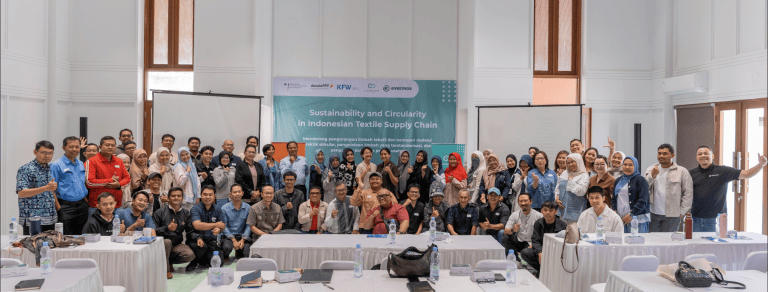
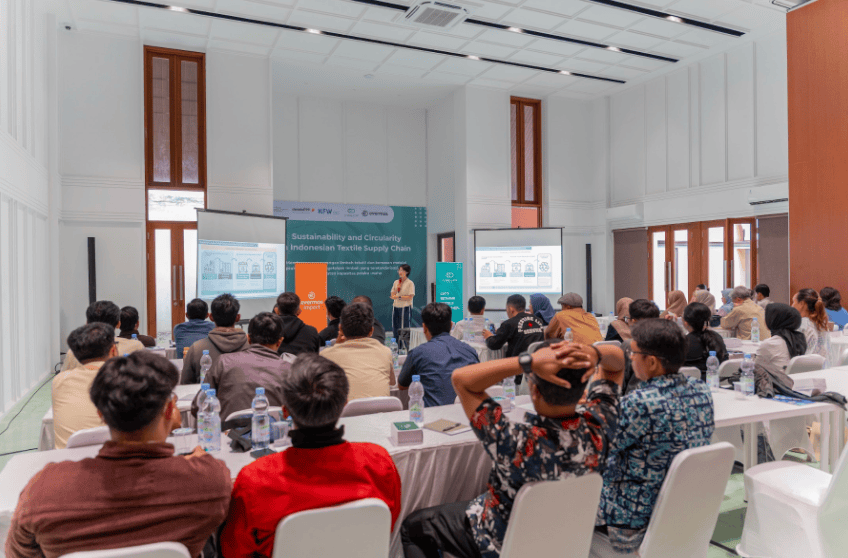
On 14 April, Closed Loop Fashion together with PT Setiap Hari Dipakai (Evermos) facilitated two targeted trainings in the framework of the joint Public-Private Partnership titled “Sustainability & Circularity in Indonesian Textile Supply Chain” aimed at strengthening the implementation of circular practices across Indonesia’s SME textile value chain.
The first training session focused on building knowledge for brands and manufacturers around textile fibres and materials, their specifications, and accurate material declaration, along with supporting practices to ensure transparency in product labelling.
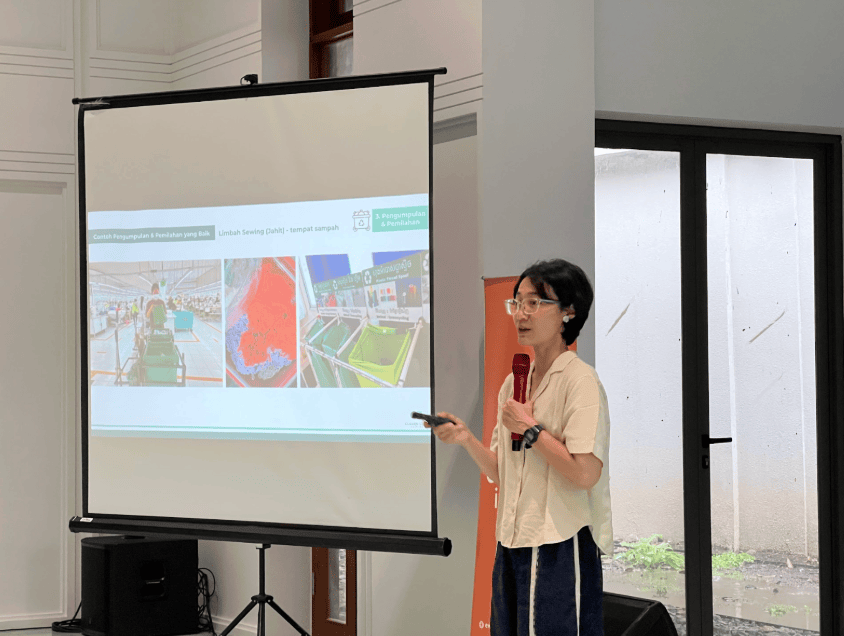
The second session focused on manufacturers and explored practical approaches to textile waste management, including sorting and proper handling of waste, possible baseline settings and reduction targets and the identification of better disposal methods, further usage opportunities and related traceability.
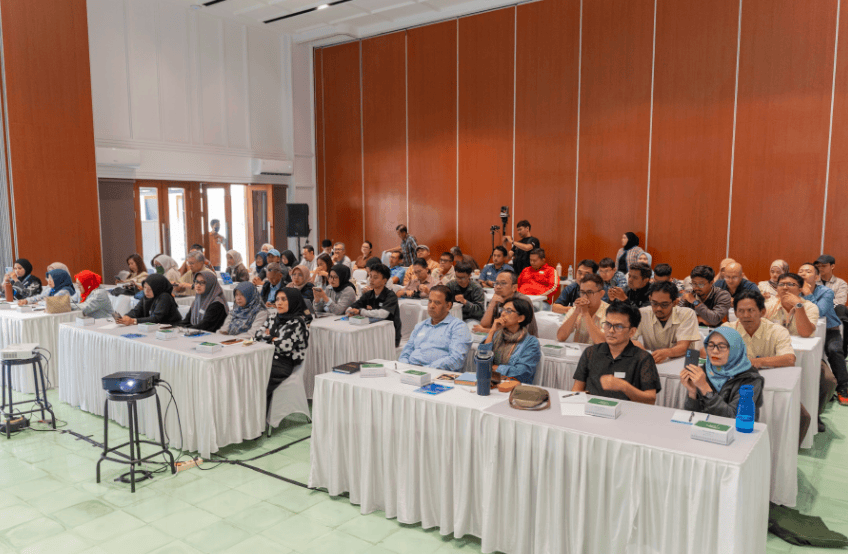
In total, 115 participants attended, with 64 joining the material declaration session and 51 manufacturers participating in the waste management training. Outreach support from Rantai Tekstil Lestari (RTL) and Rumah BUMN helped ensure strong engagement from stakeholders interested in advancing circular practices.
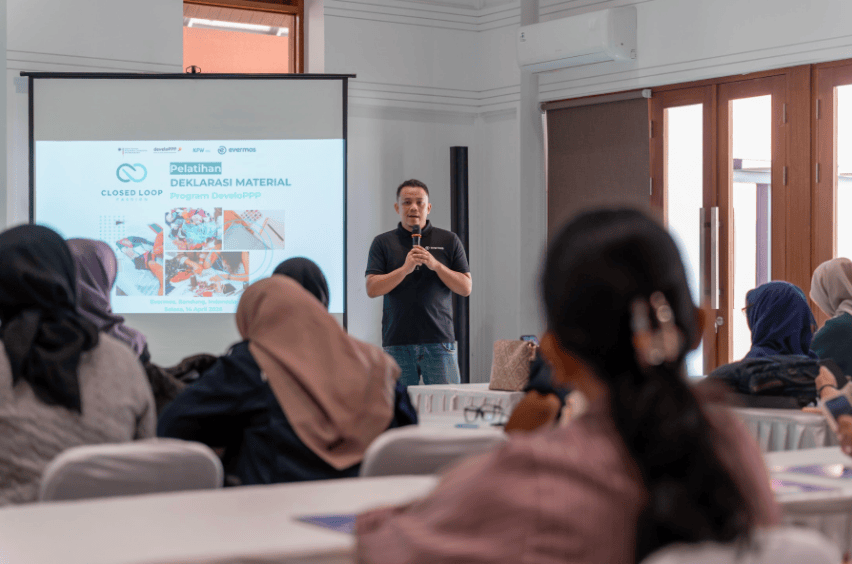
Training 1: Material Declaration
The training introduced participants to key textile fibre groups, including natural fibres such as cotton, man-made cellulosics like viscose and lyocell, and synthetics such as polyester and nylon. It highlighted the environmental implications of different materials and the importance of informed selection, especially in regards to sustainability practices. The session also emphasized material transparency as a business enabler. Participants were additionally introduced to international frameworks for standardized material classification, declaration and proper product labeling.
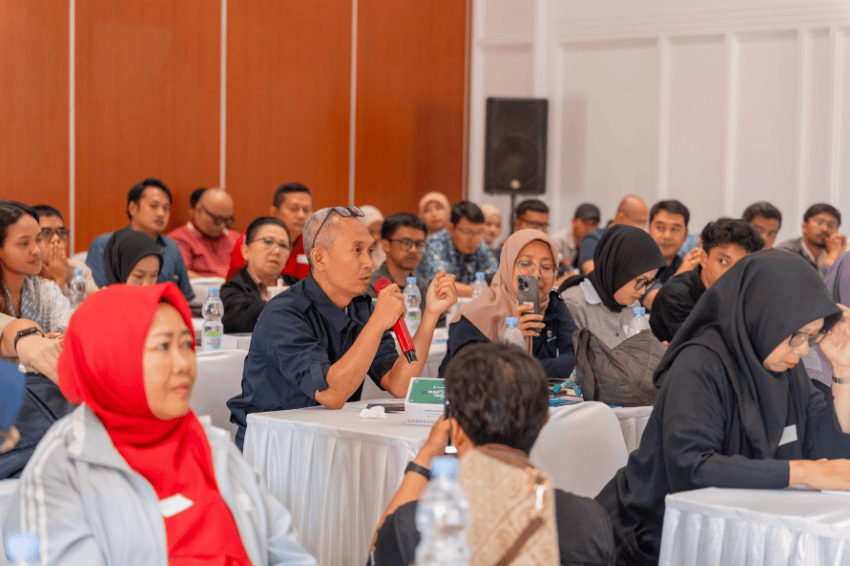
Although the training primarily targeted brands, the participation of manufacturers enriched the discussion, particularly during the Q&A session. Brands raised practical challenges around verifying material composition and accessing reliable information from suppliers. Manufacturers responded by sharing their own experience and encouraging clearer material disclosures, as well as the use of independent testing where needed. The exchange developed into a constructive dialogue between both groups, reinforcing the importance of closer collaboration and greater transparency across the value chain, ultimately benefiting brands, manufacturers, and consumers alike.
Training 2: Textile Waste Management
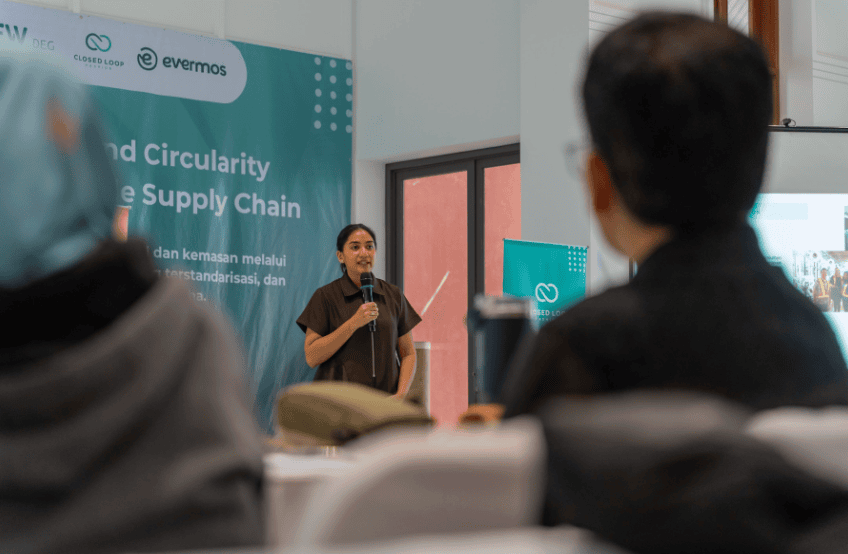
The second training focused on practical guidance for implementing textile waste management in manufacturing operations. It brought together manufacturers from different tiers, supported by Rantai Tekstil Lestari (RTL) and partners of the Public-Private Partnership with PT Setiap Hari Dipakai (Evermos).
The session introduced a structured approach based on Closed Loop Fashion’s Textile Waste Management Standard (TWMS by CLF), covering key principles such as waste tracking, documentation, classification of waste types and material compositions, and proper handling and storage practices. It also encouraged participants to map internal waste flows through a practical exercise, helping identify opportunities for better monitoring systems.
Insights from a participant survey conducted during the training indicate that factories are seeking support for end-to-end implementation of waste management systems, including hands-on guidance from planning through to execution. Key challenges identified across participants include building awareness, discipline, and ownership around waste management at all levels of the workforce.
Impact Measures & Results
Following the training, 81% of participants reported feeling confident to strengthen textile waste management practices in their factories. Post-survey results also showed a 24% increase in understanding, with nearly 95% rating their knowledge as strong. These results reflect a clear improvement in awareness and capacity across participants.
This activity is part of the develoPPP project, co-financed by the German Investment and Development Corporation / DEG Impulse gGmbH of the KfW banking group from public funds of the German Federal Ministry for Economic Cooperation and Development (BMZ) and private funding from PT Setiap Hari Dipakai. The develoPPP programme is a German government initiative that offers financial and technical support to companies pursuing sustainable investments in developing and emerging economies.
