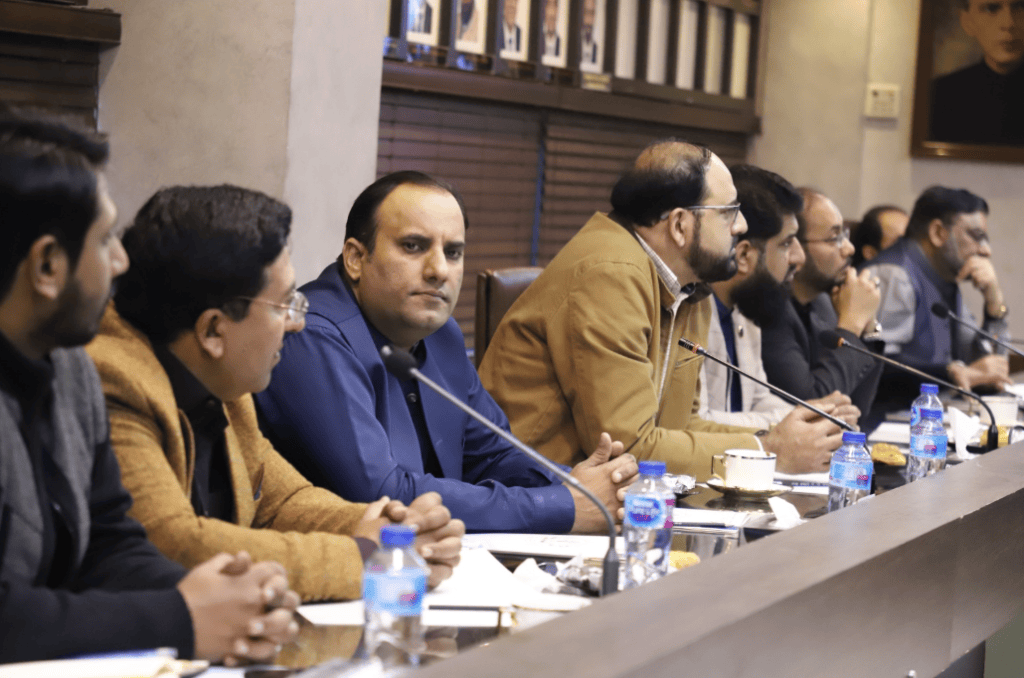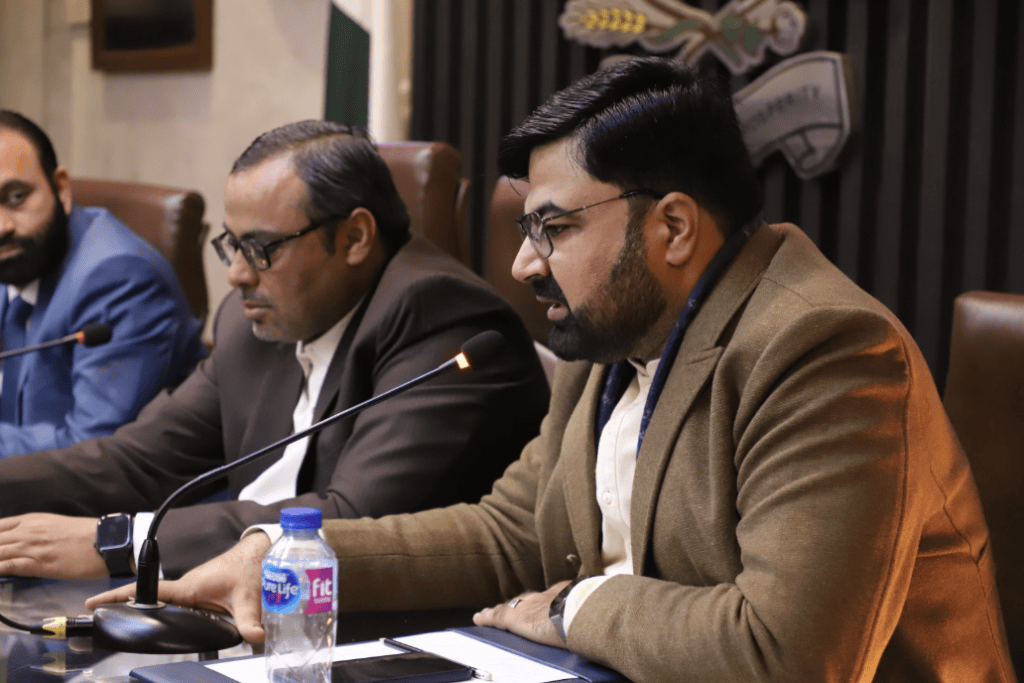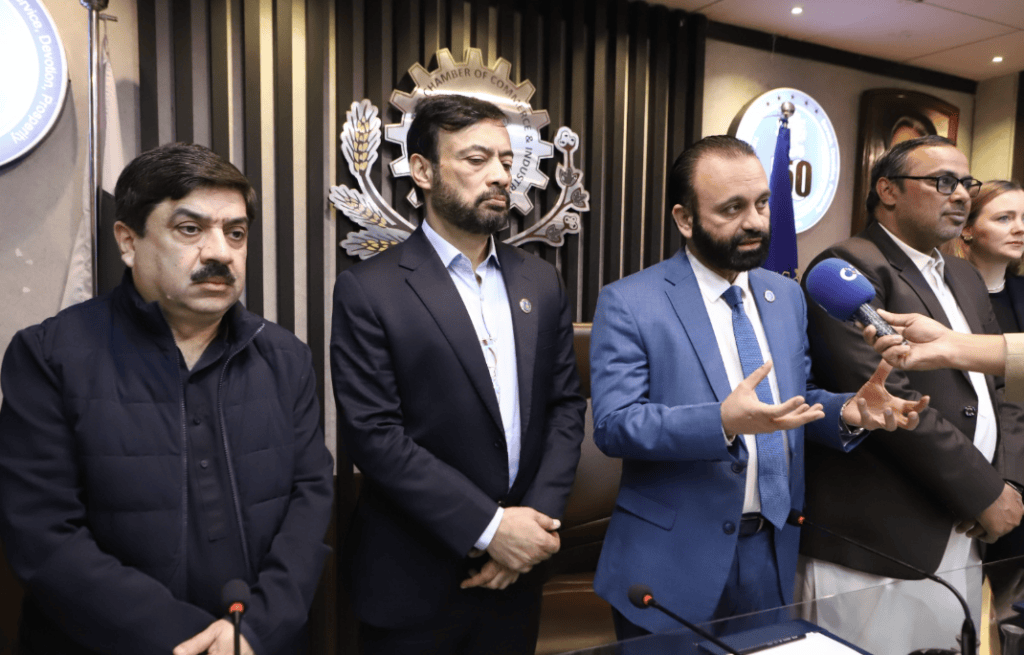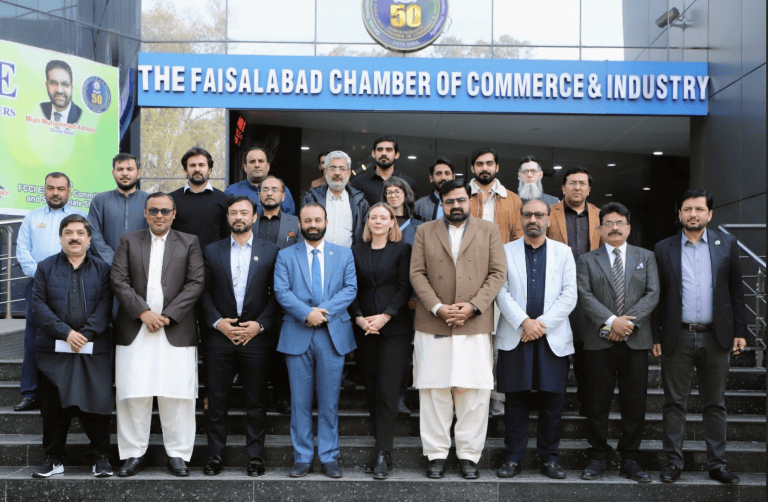
On 6 February, the Council of Textiles at the Faisalabad Chamber of Commerce & Industry (FCCI) convened a special interactive session on Textile Sustainability and Circular Economy in Faisalabad, Pakistan. The session was chaired by FCCI President Mr. Farooq Yousef Sheikh and hosted by Mr. Arif Ehsan Malik (Convenor). Closed Loop Fashion participated as Guest of Honor, delivering a strategic input session titled “Advancing Pakistan’s Textile Industry Competitiveness through Circular Adaptation.” The event was centered around this keynote contribution and was followed by an intensive and highly engaged dialogue among participants representing the Satiana Waste Cluster Association, waste handlers, recyclers, manufacturers, and academia. The session provided a platform for open exchange on the future competitiveness of Pakistan’s textile industry in an increasingly circular global economy.
Faisalabad is widely recognized as the largest textile cluster in Pakistan and represents the country’s most concentrated manufacturing hub, with capabilities spanning the entire value chain from spinning and weaving to processing and garment production. Adjacent to this industrial center lies Satiana, widely acknowledged as Pakistan’s leading textile waste recycling hub. A recurring sentiment expressed during the session was that “there is no waste in Faisalabad,” reflecting the region’s long-standing expertise in reusing textile and plastic waste streams. However, stakeholders agreed that this strength remains insufficiently recognized internationally and requires clearer branding and positioning in global markets.
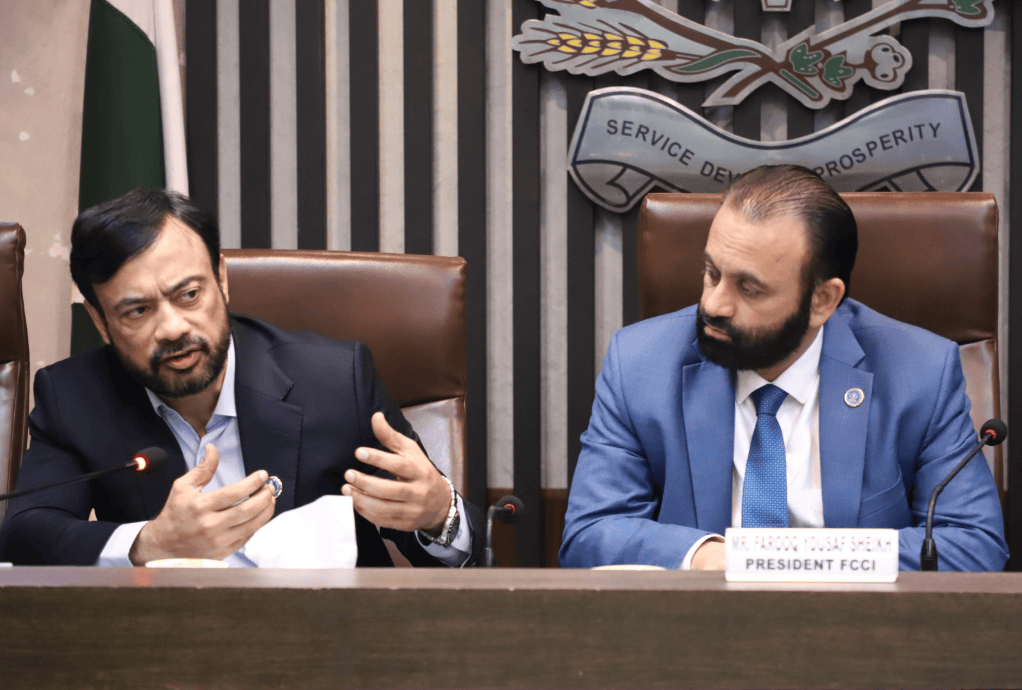
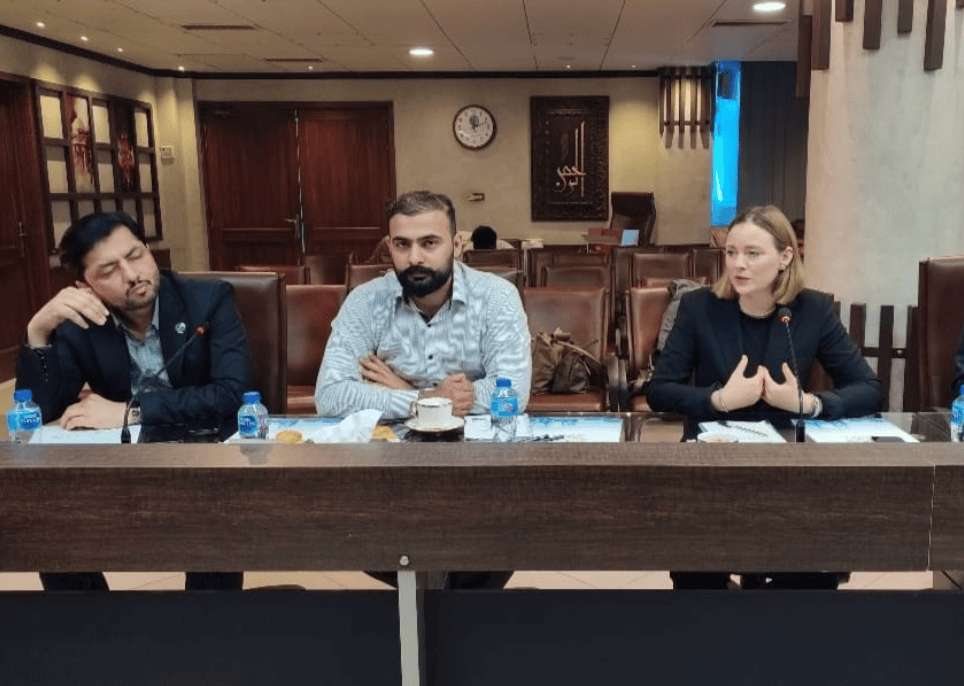
As Guest of Honor, Closed Loop Fashion emphasized that circularity is not only an environmental necessity but a strategic business opportunity for Pakistan. Given that Pakistan ranks among the most climate-vulnerable countries globally, with recurring floods and droughts increasingly threatening cotton cultivation, the textile sector must strengthen resilience across its supply chains. With the industry accounting for approximately 40 percent of the country’s industrial workforce, safeguarding long-term material access and competitiveness is of national economic importance.
Particular attention was given to Scope 3 emissions, which typically account for the majority of greenhouse gas emissions within textile value chains, especially in upstream raw material production and processing stages. Participants discussed how reverse supply chains, textile-to-textile recycling, and improved resource recovery systems could significantly contribute to decarbonization efforts. Decarbonizing upstream operations, often responsible for more than 70 percent of emissions, was identified as a major opportunity area for achieving meaningful climate impact.
Closed Loop Fashion outlined three strategic pillars for circular transformation in Pakistan:
- First, climate risk reduction: shifting toward recycled fibres can ensure more secure access to raw material feedstock while reducing dependency on water- and energy-intensive virgin inputs.
- Second, meeting global industry demand: current global capacity for recycled textile content remains insufficient, while Pakistan benefits from strong availability of cotton-rich post-industrial waste, offering a competitive advantage in scaling textile-to-textile solutions.
- Third, a compelling business case: manufacturers have the opportunity to evolve into circular solutions providers, delivering recycled fibres through to finished goods, supported by the country’s solid foundation for enhanced traceability systems.
Despite strong technical capabilities, participants candidly addressed several structural challenges. The most significant barrier identified was pricing. International markets are not yet consistently willing to absorb potential cost increases associated with recycled materials. In parallel, limited access to financing constrains investment in advanced recycling technologies. With more than 500 SMEs represented within FCCI, many smaller manufacturers lack the capital required to invest in new machinery without securing long-term demand. It was noted that even among companies that initially obtain sustainability certifications, renewals are often not pursued due to insufficient commercial returns. This points to a broader discrepancy between the global narrative around circular economy commitments and the actual purchasing behavior of international brands.
Another critical issue raised was the absence of standardized systems and harmonized compliance frameworks. While Pakistan is comparatively advanced in practical recycling activities, stronger alignment with international standards and regulatory developments is essential. In this context, upcoming European Union regulations were viewed as both a challenge and an opportunity, with the potential to open new markets for compliant recycled materials and waste-derived products.
Encouragingly, new collaboration models are beginning to emerge. Offtake agreements are increasingly being discussed as alternative financing mechanisms, enabling brands to secure long-term access to recycled fibre supply while providing manufacturers with the investment security needed to scale operations. A broader shift toward textile-to-textile recycling within brand sourcing strategies was also observed.
Overall, the session reflected a high level of engagement and strategic awareness among stakeholders. There was broad consensus that Pakistan possesses the technical know-how, industrial infrastructure, and waste stream availability required to become a leading player in circular textiles. The next phase will require coordinated action in branding, compliance alignment, financing mechanisms, and stronger demand signals from global markets. If these elements align, Faisalabad, supported by the recycling ecosystem of Satiana, has the potential to position Pakistan not merely as a manufacturing base, but as a competitive circular solutions provider in the global textile industry.
We are sincerely grateful for the opportunity to collaborate on this important initiative and to engage with such committed industry and academic leaders. Our heartfelt thanks to Yasir Nawab, Vice Chancellor, University of Kamalia and Dr Muzzamal Hussain, NTU and the KnowTex team for making this event possible. Thank you to fellow Guests of Honor Muzammal Saeed Bajwa, Chief Executive, MB Recycling Satyana; Umair Shoukat, Director, US Enterprises; Imtiaz Bajwa, Director, Suleiman Cotton Processing and Hafiz Muhammad Azam, Arslan Enterprises, for their leadership, openness and dedication to advancing circular solutions within the textile sector.
This project is delivered together with KnowTex and through Reverse Resources under the Sustainable Manufacturing and Environmental Pollution (SMEP) Programme, funded by the United Kingdom’s Foreign, Commonwealth & Development Office (FCDO) and implemented in partnership with UN Trade and Development.