

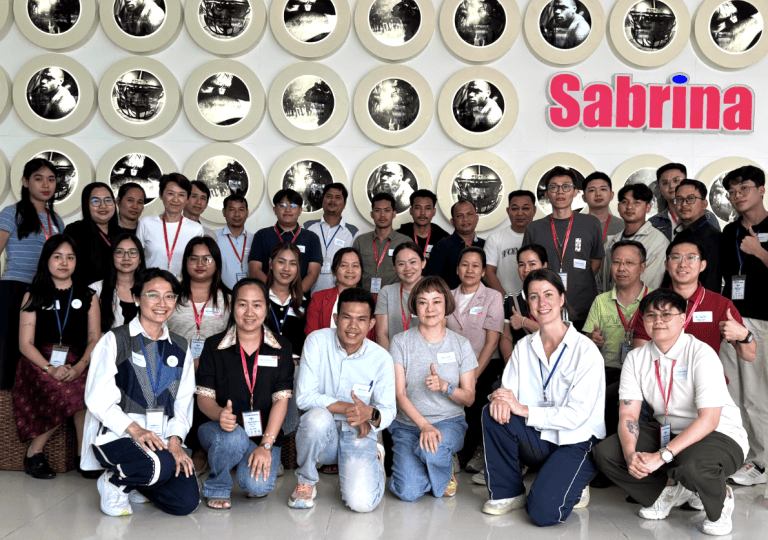
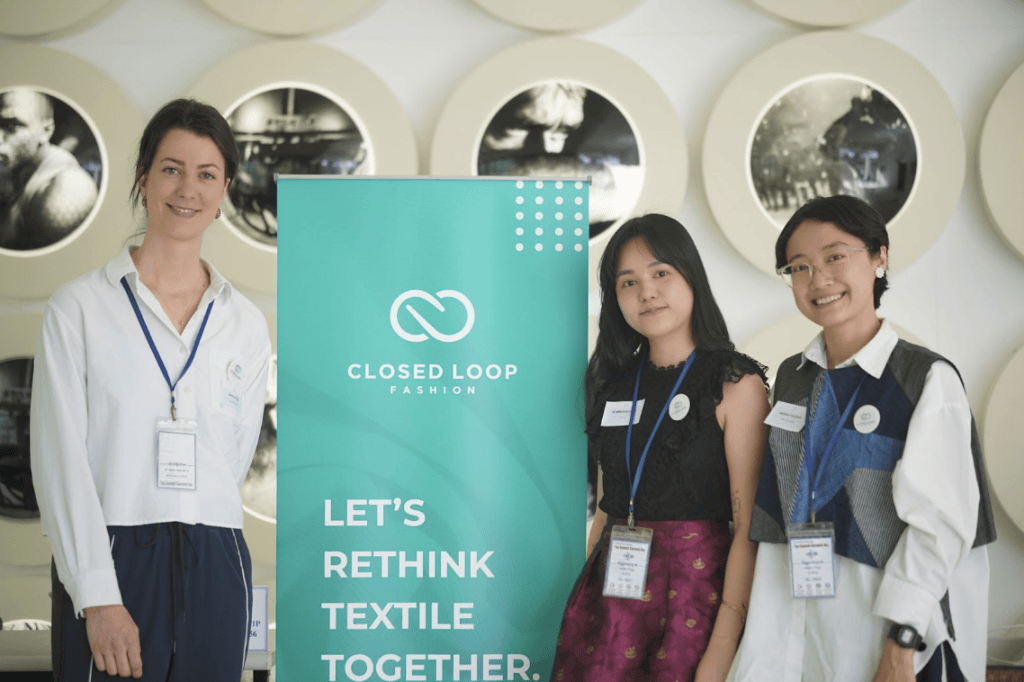
On 10 March 2026, the Closed Loop Fashion (CLF) team conducted a full-day training on Textile Waste Management Systems and Opportunities, hosted by Top Summit Garment Inc. Factory of the Sabrina Group in Phnom Penh. The session was held within the framework of the Circular Fashion Partnership (CFP) Cambodia under the initiative “Establishing Circular Textile Systems in Cambodia.” Sabrina Fashion Industrial Corp. is a Taiwan-based apparel manufacturer specializing in functional sportswear and vertically integrated garment production. In addition to facilities in Taiwan, China, Vietnam and Myanmar, the company operates three manufacturing facilities in Cambodia.
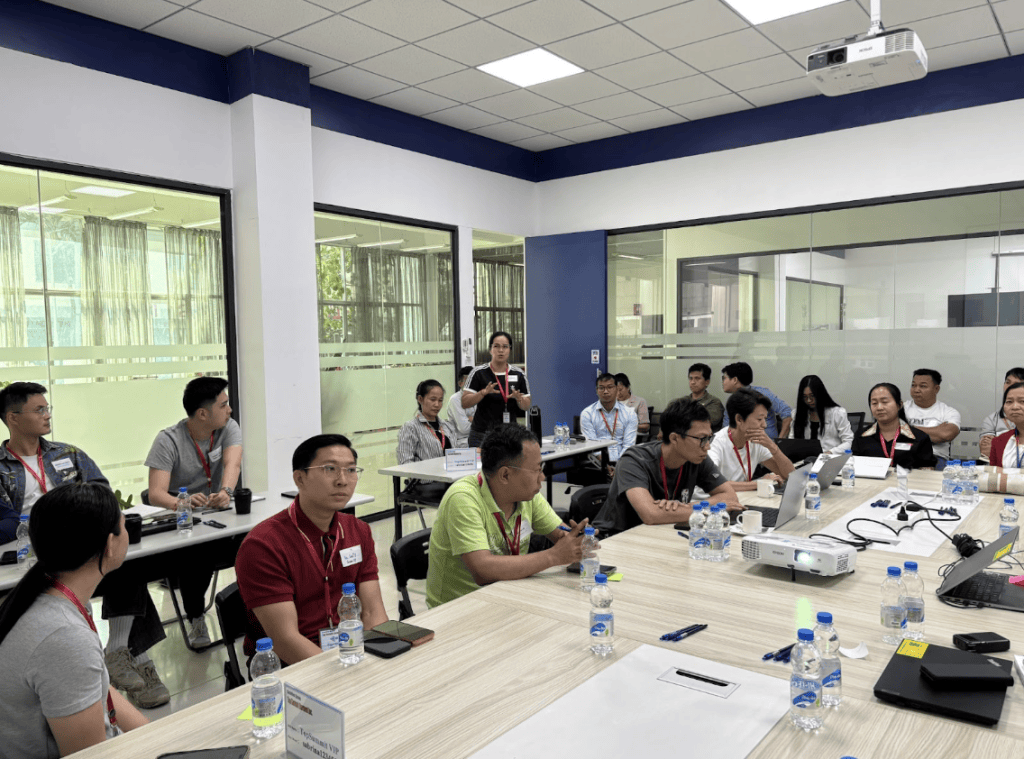
The session brought together 35 representatives from 21 factories, including production managers, sustainability managers, and CSR teams, reinforcing the cross-functional approach required for effective implementation.
In the months leading up to the training, all participating factories underwent comprehensive facility assessments conducted by Closed Loop Fashion under our proprietary Textile Waste Management Standard (TWMS by CLF). Following these assessments, each factory received a detailed report outlining key findings and recommended Corrective Actions, alongside follow-up visits to support initial implementation. Based on the assessment findings, the step-by-step training focused on addressing the most common gaps and strengthening factory capacity to implement improved textile waste management practices. The session was delivered in English and Khmer.
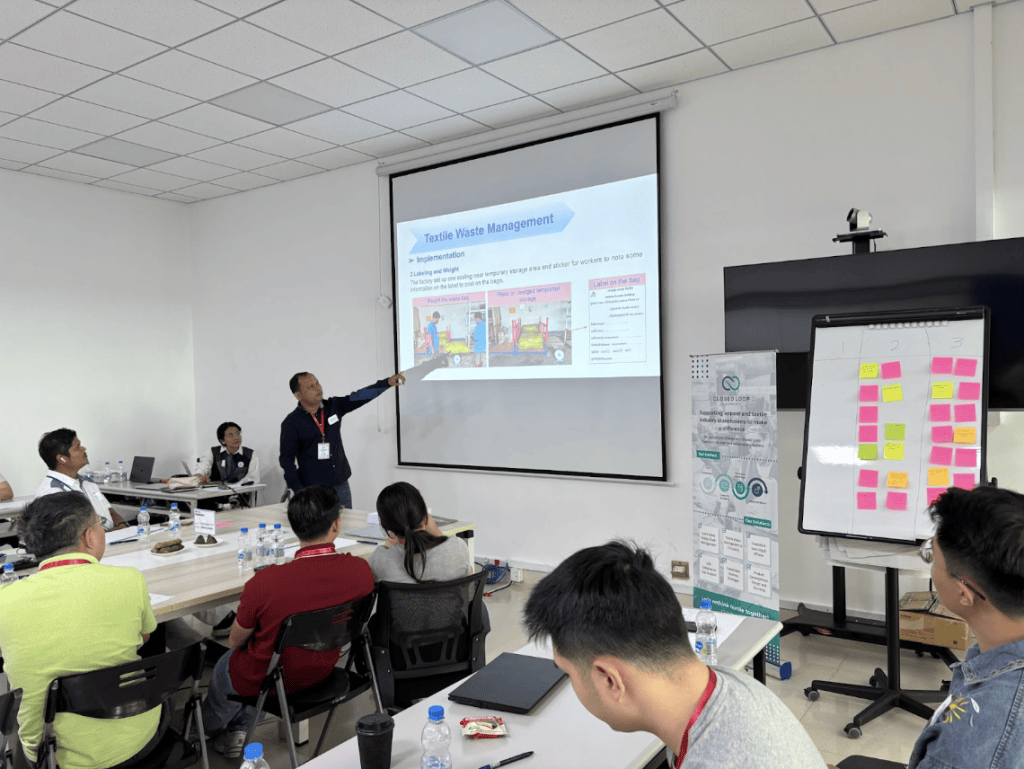
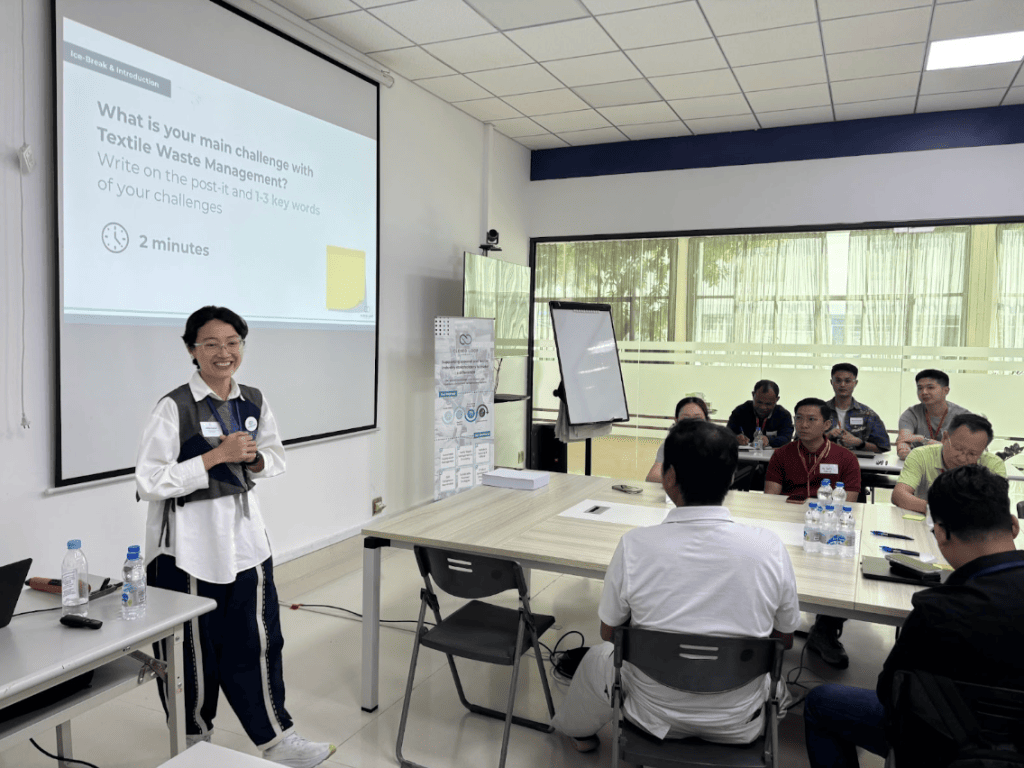
Reframing the Importance of Textile Waste Management
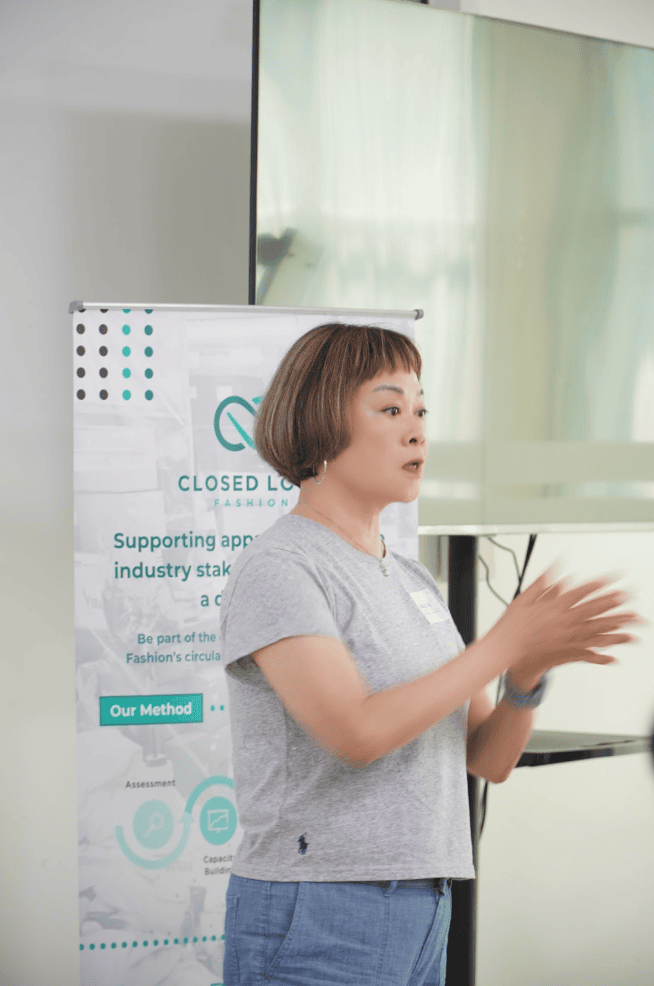
The day opened with welcoming remarks from Nicole Chu, Sustainability Director of Sabrina Group, who set an engaging and open tone for the training. It also marked the first time all participating manufacturers came together in one room, creating a valuable opportunity to exchange experiences and explore shared challenges. The first session introduced the importance of Textile Waste Management (TWM) in the transition to a circular economy, highlighting how structured waste systems can improve both environmental performance and operational efficiency.
A key highlight was the sharing session by Hun Lina, Business Development Manager at Green Up Cambodia, who provided a waste handler’s perspective on textile waste value, quality requirements, and collaboration gaps between factories and recyclers, emphasizing that effective circular systems require alignment across the value chain.
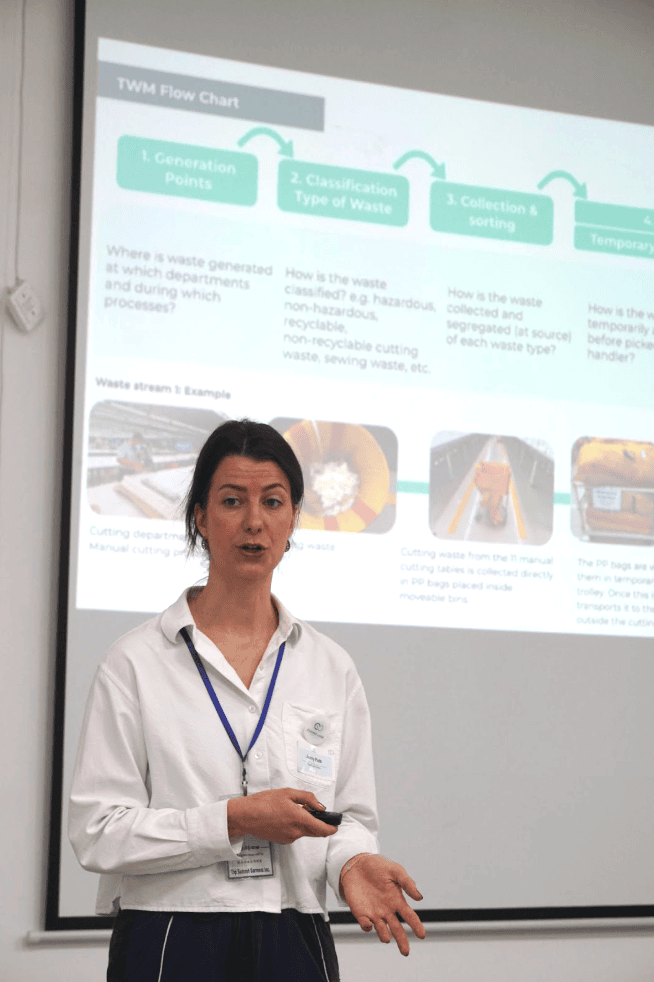
Textile Waste Management Step-by-Step
The second part of the training moved into structured implementation guidance. Participants worked through Textile Waste Management step-by-step following the Textile Waste Management Standard by Closed Loop Fashion (TWMS by CLF), covering:
- Monitoring and tracking waste generation
- Documentation, SOPs and management procedures
- Waste classification
- Collection and sorting systems
- Storage practices
- Disposal & Further usage verifications
- Workplace health and safety, risk assessments and related compliance measures
The interactive Q&A format allowed factories to raise specific implementation challenges identified during the recent CAP cross-check visits. The focus remained practical on how to translate procedures into consistent daily practice across the production floors and warehouses.
Practical Insights and Peer Exchange
The final session focused on applied learning and peer exchange, featuring insights from Seduno Group and ReMade. Seduno Group Co., Ltd., a China-based apparel manufacturing group with facilities in Cambodia, has been assessed repeatedly by Closed Loop Fashion since 2024. During the session, Reun Srib, CSR Officer at Seduno Group, shared the company’s journey in improving textile waste management and the progress achieved through ongoing implementation and reassessments. He highlighted both achievements and remaining challenges, particularly the difficulty of maintaining consistent waste segregation and ensuring workers follow newly established procedures.
Hemmunind Hou, Co-Founder of ReMade, introduced creative pathways for further use of textile waste through upcycling. As a Phnom Penh-based, youth and women-led social enterprise, ReMade transforms textile waste into unique products that celebrate Cambodian cultural and artistic value and express openness to collaborate with industry partners.
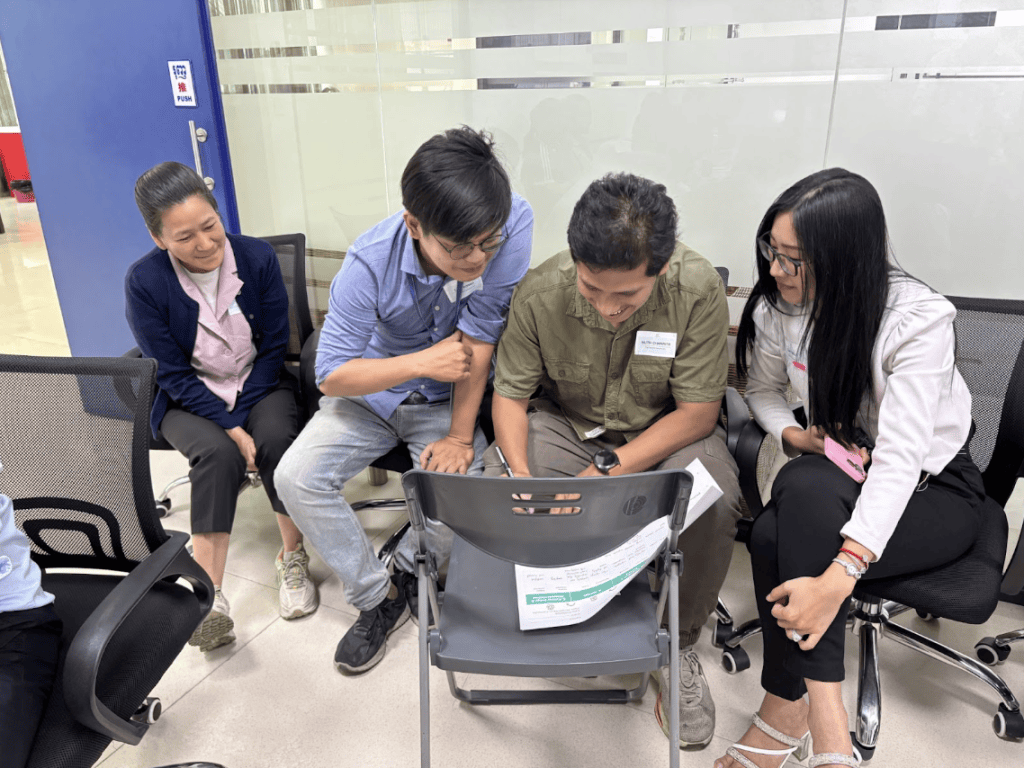
Participants then engaged in a “waste flow” exercise, mapping material movement within factory operations to identify opportunities for improved waste management and resource recovery. The session concluded with group reflections, where participants shared positive feedback and highlighted the practical value of the training. As one participant noted: “I really learned a lot today. Now I truly understand all the different steps of textile waste management from the point of generation to the final disposal method and the importance of this to enable further circular use.”
The training is part of the Circular Fashion Partnership (CFP) Cambodia program, funded by the H&M Foundation and participating brands, led by the Global Fashion Agenda (GFA) with GIZ as National Lead, and implemented by Closed Loop Fashion, Reverse Resources, and Circle Economy.
