

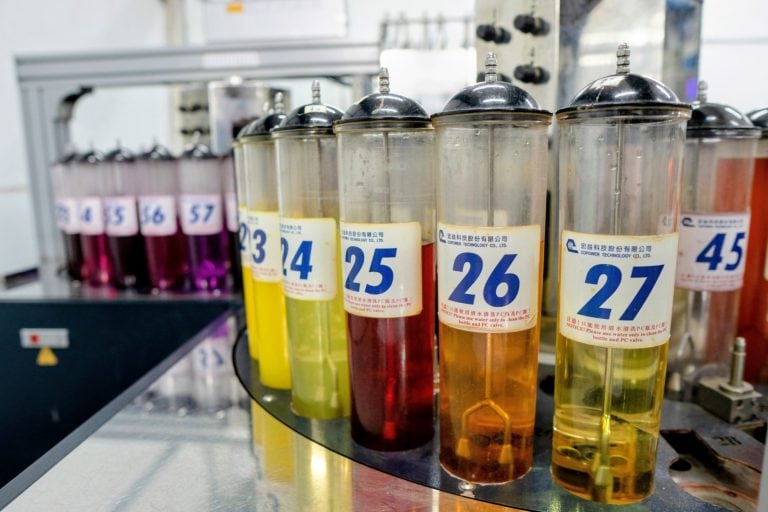
The Circular Fashion Programme (CFP) Indonesia has officially kicked off its chemical work package, a collaborative pilot that tackles the critical data blindspot between textile manufacturing and advanced recycling. While traditional chemical management focuses heavily on eliminating hazardous inputs for consumer safety, this initiative introduces a vital new lens: identifying how non-hazardous process chemistry impacts mechanical and chemical recycling technologies. By embedding chemical data tracking directly into actual industry realities at the Tier 2 manufacturing stage, this work is building a scalable blueprint to ensure textile waste flows can be pre-verified as viable feedstock before they even reach a recycler.
Addressing an Overlooked Barrier to Textile Recycling
A central focus of this scope is the management of “recycling disruptors”. These are chemical inputs that are not necessarily classified as hazardous, but can severely interfere with T2T recycling by reducing efficiency, increasing processing costs, and limiting the performance of both mechanical and chemical recycling technologies.
Because textile waste today carries no chemical data sheets, recyclers struggle to assess material compatibility. This challenge is further intensified by the fact that many advanced textile-to-textile recycling technologies are only just emerging or commercially scaling, and are still actively discovering which specific process chemicals in feedstock act as disruptors. This activity bridges that gap by directly connecting upstream production chemistry with downstream recycling realities, creating a shared learning loop between manufacturers and scaling technology providers.
Project Scope & Key Activities
This exploratory pilot combines assessments, capacity building, and reverse traceability research to map chemical flows:
- Chemical Management Assessments: On-site assessments are conducted by Closed Loop Fashion aligned with the ZDHC Supplier to Zero V2.0 framework. Facilities receive a tailored Corrective Action Plan (CAP) to support improvements.
- Capacity Building: Tailored training on chemical management is delivered to factory teams via the ZDHC Academy and customised training conducted by Closed Loop Fashion, with follow-up visits to verify implementation.
- Data Flow Methodology for Disruptors: In parallel, the project partners are consolidating insights to define how critical chemical information can practically travel alongside materials as they move from the manufacturing supply chain into the waste handling sector, ensuring recyclers know exactly which inputs might halt or degrade their processes.
- Reverse Traceability Validation: A specialized validation study links finished products back to production inputs, verifying AFIRM RSL compliance and assessing the practical use of MRSL-conformant formulations.
Intended Outcomes
Running through mid-2026, the findings will lay the groundwork for a scalable, industry-aligned methodology to trace and manage recycling disruptors. In June 2026, the initial findings will be shared with a group of selected recyclers during the ZDHC Co-Creator Days to gather their direct feedback and further align the approach with practical recycling needs. By addressing chemical data mobility directly at the source, this initiative is building the necessary framework to ensure textile waste entering the ecosystem is clean, compliant, and genuinely compatible with tomorrow’s scaling recycling technologies.
This scope of work is part of the Circular Fashion Partnership (CFP) Indonesia program, funded by the H&M Foundation and participating brands, led by the Global Fashion Agenda (GFA) with Rantai Tekstil Lestari (RTL) as National Lead, and implemented by Closed Loop Fashion (CLF), Reverse Resources (RR), Circle Economy (CE) and support from ZDHC.