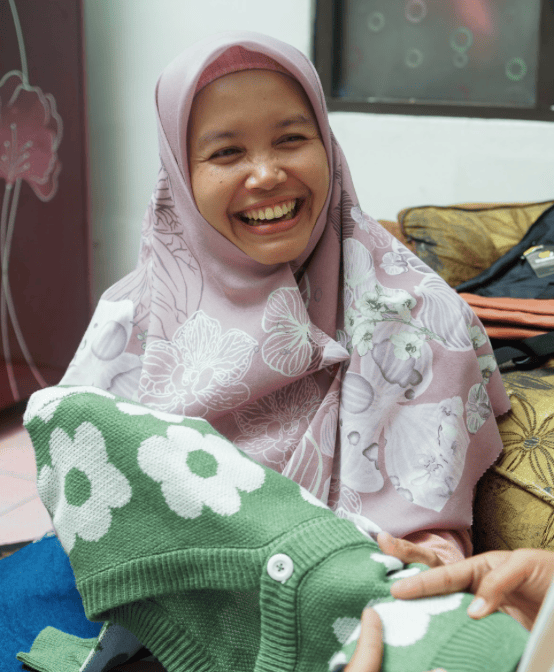
Indonesia’s textile and apparel industry provides employment for approximately 4 million people in 2025 (indonesia.go.id), making it one of the nation’s largest job-creating sectors. At its core are around half a million small and medium-sized enterprises (SMEs), many of which play a central role in the growing modest fashion segment, as Indonesia is a predominantly Muslim country. With the rapid rise of E-commerce, where 70% of consumers now buy clothing and footwear online (Kr-Europe), modest wear e-commerce platforms like Evermos have created new opportunities for local brands and resellers. This growth, however, has also brought pressing sustainability challenges.
Evermos, as a re-seller company that sells modest wear and Muslim products, is part of a segment experiencing rapid growth. With modest fashion evolving into a mainstream subculture and Muslim influencers driving over 125 million TikTok views in 2023, the market is becoming both commercially significant and culturally influential. By 2030, nearly 30% of the world’s youth will be Muslim, which reflects the scale of this opportunity. Embedding sustainability into this sector is therefore timely and essential, ensuring that growth is aligned with environmental responsibility and long-term competitiveness.
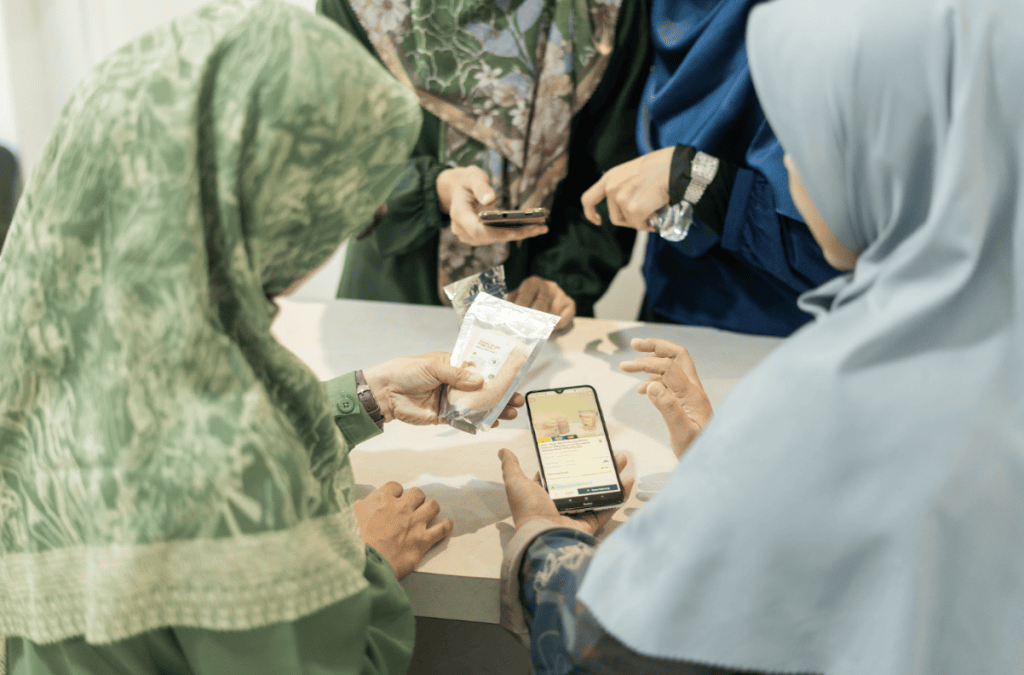
Closed Loop Fashion is partnering with PT Setiap Hari Dipakai, the company behind the Evermos platform, on a two-year Public-Private-Partnership project in the framework of the develoPPP programme. Evermos’s inclusive approach prioritizes equitable opportunity, especially for women, and SMEs with limited digital or capital access. Evermos integrates compliant product curation, ethical sourcing and ESG considerations to ensure that economic growth is aligned with social value.
The project will address the following focus areas:
Building Systems for Circularity
The project aims to introduce CLF’s standardised Textile Waste Management Systems (TWMS) at 5 Evermos partner manufacturers in West Java. Through factory assessments, corrective action plans and follow-up visits, these facilities will adopt structured practices for collection, segregation, monitoring and preparation of textile waste. The goal is to divert their post-industrial textile waste to preferred disposal methods such as recycling & upcycling while establishing replicable models for other SMEs to follow.
Circular Design
Circular design will be implemented through hands-on training for 100 SME brands, a Circular Design Guide will be developed with pilot partners. At the same time, material transparency will be strengthened by developing a Material Declaration Guideline, providing training for 35 brands and 15 manufacturers, and piloting product labelling with SMEs.
Packaging Intervention and PCF Calculations
Packaging is another critical focus area that will be targeted by conducting Product Carbon Footprint (PCF) calculation to identify high-impact intervention points of conventional packaging and identify alternative packaging. By quantifying the potential CO₂ reductions between conventional and alternative scenarios, the project aims to cut an estimated 900 tonnes of CO₂ emissions while exploring scalable reuse and recycling models.
Education and Knowledge Sharing
Together with 2 educational partners, the project will co-develop and deliver a lecture series on sustainability and circularity to at least 150 university students. Design students will apply these concepts in practice, creating new products from waste or designed for recyclability. By embedding circularity into curriculum, the project strengthens long-term skills for the next generation of young designers and entrepreneurs.
Exploring New Business Models
The project will also pilot circular business approaches such as resale, rental and take-back schemes within the Evermos platform. Insights will be consolidated into a recommendation report for scaling circular models across the Evermos platform, opening pathways for SMEs to innovate and remain competitive in a changing market.
By aligning industry, government, education and digital platforms, the initiative positions SMEs as active participants in the circular economy, ensuring that Indonesia’s growing modest fashion sector can remain both competitive and sustainable in the years ahead.
This develoPPP is co-financed by the German Investment and Development Corporation / DEG Impulse gGmbH of the KfW banking group from public funds of the German Federal Ministry for Economic Cooperation and Development (BMZ) and private funding from PT Setiap Hari Dipakai. The develoPPP programme is a German government initiative that offers financial and technical support to companies pursuing sustainable investments in developing and emerging economies. Furthermore, the project is carried out in collaboration with and supported by Double Delta, an impact investment and advisory firm based in Singapore.
All images courtesy of Evermos.