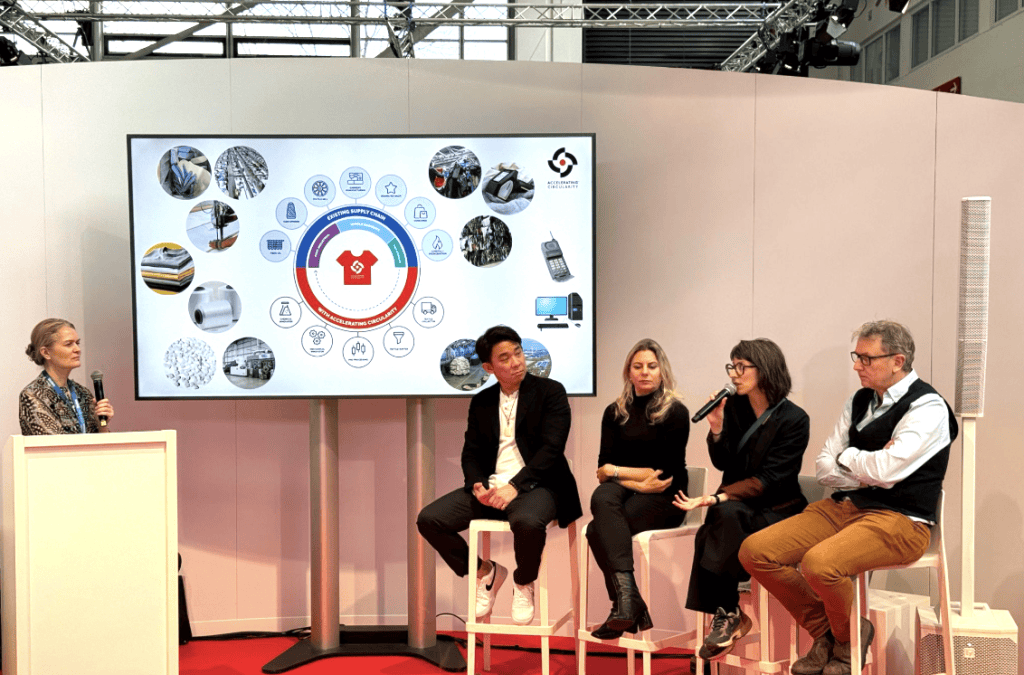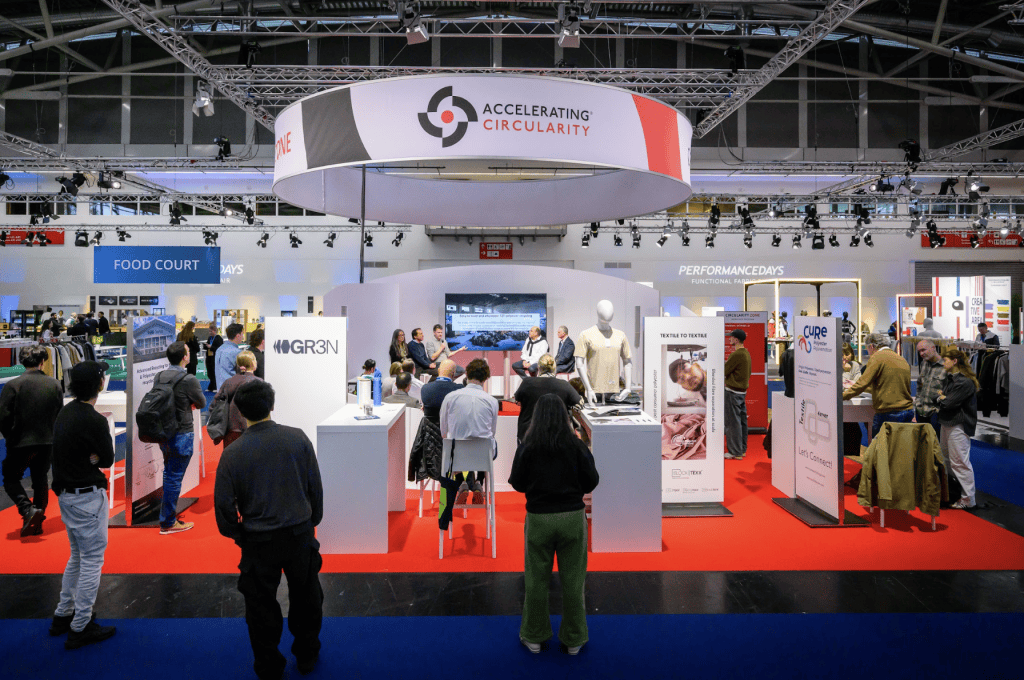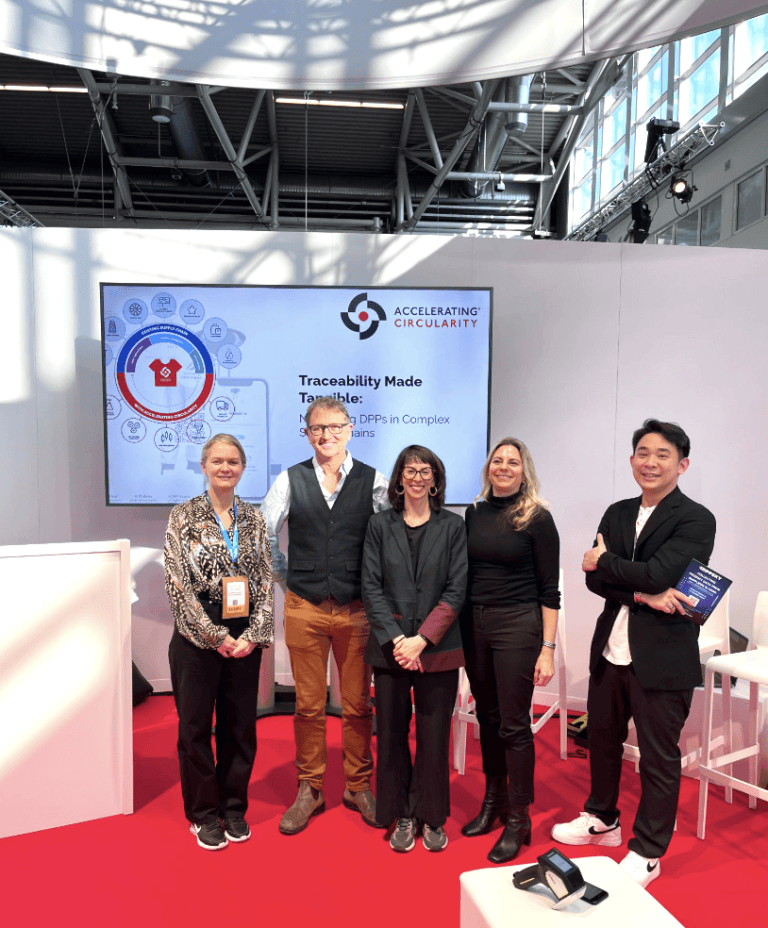
Closed Loop Fashion was invited to take part in a panel talk at the trade fair Performance Days in Munich on 18 March 2026. The panel titled “Traceability Made Tangible: Navigating DPPs in Complex Supply Chains” was held in the event’s Circularity Zone, organized by Accelerating Circularity. The session highlighted one of the industry’s currently pressing challenges: turning the promise of Digital Product Passports (DPPs) into systems that can realistically function across complex global textile supply chains.
DPPs are set to become mandatory in Europe under the new Ecodesign Regulation, but the path to implementation remains unclear. There is currently no one-size-fits-all solution for collecting and verifying the required data in an automated way. As a result, both fashion brands and service providers are still grappling with where to begin, navigating fragmented systems, limited traceability, and evolving expectations. Currently the industry is in a learning phase, adapting in real time as standards, expectations and practical challenges continue to evolve.
The panel brought together experts working across different parts of the value chain, including digital material identity systems, data capture platforms, textile waste mapping and both post-consumer (PCW) and post-industrial waste (PIW) sorting and recycling. The session featured Arianna Nicoletti, Senior Consultant Textile Waste Management & Certifications Specialist at Closed Loop Fashion, alongside Ryan Ting, Co-Founder of DPPSKY; Daniela Kolodziej, Global Business Development Manager for Circular Economy at trinamiX GmbH; Tim Cross, Founder and CEO of Circular Textiles Foundation and was moderated by Petra Schweiger on behalf of Accelerating Circularity.
The panel unpacked the realities of traceability and data verification across complex global supply chains, drawing on challenges from multiple perspectives. It also explored the technologies shaping efficient DPP systems, as well as the opportunities they create for both brands and suppliers.
Representing Closed Loop Fashion, Arianna Nicoletti shared insights from the organization’s work implementing textile waste management systems and circular supply chain initiatives across international projects. Drawing on Closed Loop Fashion’s experience developing the Textile Waste Management Standard (TWMS by CLF) and waste-mapping methodologies, she highlighted a key point in the DPP discussion: while digital systems can improve transparency, reliable data ultimately depends on robust tracking systems on the ground with proper verification mechanisms, as well as clearly defined responsibilities. Such management systems can only be implemented if everyone from management to workers are on board, adequately trained and inspired by the leadership.
The session at Performance Days moved beyond theory to explore how traceability and verification of materials and chemical content can work in practice. Engaging both the panel and the audience, it highlighted the growing urgency for brands to understand the types and volumes of waste generated by their production, particularly with upcoming Ecodesign regulations likely requiring 10–20% recycled content in new products. Brands in the audience shared their experiences with methodologies and tools for creating transparent information flows with suppliers, emphasizing the need for more automated systems. The discussion also served as a forum for dialogue among stakeholder groups, underscoring the collaboration required to enable effective Digital Product Passport (DPP) traceability measures.